Ahmet Cingöz
Asst. Prof. Ahmet Cingöz focuses on uncovering the mechanisms that drive therapy resistance in aggressive cancers. His work integrates genetic, transcriptomic, and metabolic approaches to identify key regulators of tumor survival and treatment failure. A central theme of his research is understanding how apoptotic pathways become silenced in cancer cells and how these pathways can be therapeutically reactivated. Although TRAIL (Apo2L) holds promise as a tumor-selective apoptotic agent, many tumors, including glioblastoma, exhibit innate or acquired resistance. His studies investigate both classical apoptotic defects and non-genetic intracellular factors—including survival signalling pathways—that contribute to TRAIL resistance, to inform more effective targeted therapies.
In parallel, his research examines metabolic adaptations that enable glioblastoma cells to evade therapy. While GBM is strongly dependent on glucose metabolism, emerging evidence shows that oxidative phosphorylation (OxPhos) remains a critical energy source even in the presence of mitochondrial abnormalities. GBM cells further enhance their metabolic resilience by rewiring pathways such as lipid metabolism, which contributes to treatment resistance. These insights underscore the tight link between metabolic plasticity and therapeutic escape. Together with CRISPR-based functional screens and in vivo models, his work aims to define the metabolic and molecular vulnerabilities that can be leveraged to overcome resistance in glioblastoma.
Research Area: molecular cancer biology
Field of expertise
Cancer therapy resistance, tumor metabolism, tumor heterogeneity.
Qualifications
Dr. Cingöz received his B.Sc. in Biology from Istanbul University in 2009, followed by an M.Sc. in Medical Biochemistry from Marmara University in 2013. He then completed his Ph.D. in Cellular and Molecular Medicine at Koç University in 2019. Between 2019 and 2023, he served as a Post-doctoral Research Fellow at Koç University's KUTTAM research center.
Ongoing work
Cingöz Lab is dedicated to advancing our understanding of tumor metabolism and developing models to address therapy resistance. Our primary goal is to elucidate the complex relationship between the metabolic processes of cancer cells and their resistance to therapy. Furthermore, our research delves into the complexities of tumor heterogeneity and clonal dynamics. To achieve these objectives, our lab employs a multifaceted approach, integrating various techniques such as in vitro experiments, in vivo studies, and advanced bioinformatics methods in cancer research.
Cingöz Lab contributes significantly to therapy resistance and tumor metabolism, with a research focus on tropical and neglected diseases. His efforts support BILSAB's global health research objectives.
Vision
As a team leader at BİLSAB, he envisions fostering a strong and well-educated scientific community in Turkey while guiding promising scientists and students on their journey. Under his leadership, BİLSAB aims to promote interdisciplinary research by bridging basic science with clinical applications, leveraging the resources of the university hospital and a culture of collaboration. He is committed to creating a dynamic environment that drives innovative solutions to scientific challenges and equips young researchers with the skills and experience essential for successful careers. By prioritizing excellence and teamwork, he seeks to establish BİLSAB as a hub for cultivating high-quality researchers who will shape the future of science in Turkey and beyond.
Approach
I am at BİLSAB to foster a strong and well-educated scientific community in Turkey while supporting promising scientists and students in their journey. As a research-focused institute, BİLSAB promotes interdisciplinary research by bridging basic science with clinical applications through the resources of the university hospital and a culture of collaboration. This dynamic environment not only drives innovative solutions to scientific challenges but also equips young researchers with the skills and experience essential for career success. By prioritizing excellence and collaboration, BİLSAB serves as a hub for cultivating high-quality researchers who will shape the future of science in Turkey and beyond.
About the team
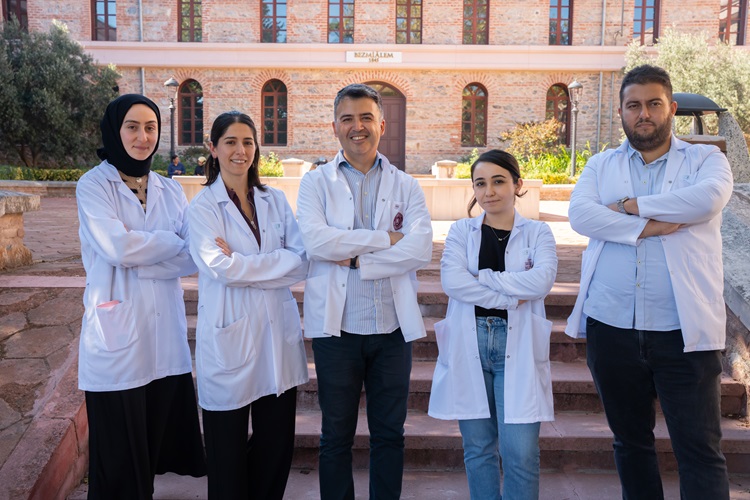
Demet İnci
Furkan Emre Bora
Projects
-
Elucidating the Role of Lipid Metabolism in Apoptotic Therapy Resistance in Glioblastoma.
-
Investigation of metabolic factors playing a role in apoptotic therapy resistance in glioblastoma cells.
-
Examination of the role of tumor metabolism in glioblastoma by
in vivo CRISPR/Cas9 screen.
-
Exploration of oxidative phosphorylation mechanisms in TRAIL-resistant glioblastoma cells at the molecular level.
Lab alumni
Publications (selected):
-
Lingadahalli S, Ersoy Fazlioglu B, Altintas UB,
Cingöz A, Tekoglu E, Yu IPL, Dikbas UM, Andomat H, Kulac I, Morova T, Xiao K, Gleave M, Fazli L, Cejas P, Cherkasov A, Zwart W, Long H, Collins C, Bagci-Onder T, Lack NA. “HOXB13 alters chromatin accessibility in prostate cancer through interactions with the SWI/SNF complex." bioRxiv (2023), 2023.09.04.556101. https://doi.org/10.1101/2023.09.04.556101. (Submitted: Nature Cancer)
-
Kayabolen A, Sahin GN, Seker F,
Cingoz A, Isik B, Acar S, Solaroglu I, Wakimoto H, Cahill D, Cribss A, Oppermann U, Bagci-Onder T. “Orthogonal targeting of KDM6A/B and HDACs mediates potent therapeutic effects in IDH1-mutant glioma". bioRxiv, 2020.11.26.400234; https://doi.org/10.1101/2020.11.26.400234.
(Revision:
Cell Death and Disease).
-
Yedier-Bayram O,
Cingöz A, Yilmaz E, Aksu AC, Esin B, Pınarbaşı-Değirmenci N, Cavga AD, Dedeoğlu B, Cevatemre B, Syed H, Philpott M, Cribbs AP, Oppermann U, Lack, NA, Acilan C, Onder TT and Bagci-Onder T. “Chromatin-focused genetic and chemical screens identify BRPF1 as a targetable vulnerability in Taxol-resistant triple-negative breast cancer." bioRxiv 2024.04.16.587277; doi: https://doi.org/10.1101/2024.04.16.587277.
(Revision: Experimental & Molecular Medicine).
-
Ozyerli-Goknar E, Kala EY, Aksu AC, Bulut I,
Cingöz A, Niuzamuddin S, Biniossek M, Seker-Polat F, Morova T, Aztekin C, Kung S, Syed H, Tuncbag N, Gonen M, Philpott M, Cribbs A, Acilan C, Timmers HTM, Lack NA, Onder TT, Bagci-Onder T. “Epigenetic-focused CRISPR/Cas9 screen identifies ASH2L as a regulator of glioblastoma cell survival".
Cell Commun Signal., 2023 Nov 16;21(1):328. doi: 10.1186/s12964-023-01335-6.
-
Çavdar S., Kose B, Altinoz D, Soyler G,
Cingöz A, Gurses İA, Ozkan M, Asliyurek H, Cakir H. “Lymphatic Vessels Accompanying Dorsal and Basal Dural Sinuses in the Human Brain". Journal of Chemical Neuroanatomy, 2023, 134, 102357.
-
Gunduz H, Acari A, Cetin S, Almammadov T, Pinarbasi-Degirmenci N, Dirak M,
Cingoz A, Kilic E, Bagci-Onder T, Kolemen S. “Directing chemiluminescent dioxetanes to mitochondria: A cationic luminophore enables in vitro and in vivo detection of cancer cells upon enzymatic activation". Sensors & Actuators: B. Chemical 383,133574, 2023.
https://doi.org/10.1016/j.snb.2023.133574.
-
Yedier-Bayram O, Gökbayrak B, Aksu AC, Cavga AD, Kayabolen A, Kala EY, Karabiyik G,
Cingöz A., Günsay R, Morova T, Uyulur F, Lack, NA, Onder TT and Bagci-Onder T. ''EPIKOL, a chromatin-focused CRISPR/Cas9 library identifies cancer-specific epigenetic vulnerabilities''.
Cell Death and Disease, 13, 710, 2022.
https://doi.org/10.1038/s41419-022-05146-4.
-
Dogan NO, Bozuyuk U, Erkoc P,
Cingoz A, Seker F, Karacakol A, Nazeer MA, Sitti M, Bagci-Onder T, Kizilel S. “Parameters Influencing the Transfection Efficiency of PEGylated Chitosan Nanoparticles: Experimental and Modeling Approach".
Adv. NanoBiomed Res., 2021.
-
Cingoz A, Ozyerli-Goknar E, Morova T, Seker-Polat F, Selvan ME, Gümüş ZH, Bhere D, Shah K, Solaroglu I, Bagci-Onder T. “Generation of TRAIL-resistant cell line models reveals adoption of different mechanisms of acquired resistance and re-sensitization".
Oncogene,
40, 3201–3216, 2021.
-
Senbabaoglu F, Aksu AC,
Cingoz A, Seker F, Kahya Z, Solaroglu I, Bagci-Onder T. “Drug Repositioning Screen on a New Primary Cell Line Identifies Potent Therapeutics for Glioblastoma". Front. Neurosci, 2020, Dec 17;14:578316.
-
Sur-Erdem I, Muslu K, Pinarbasi N, Altunbek M, Seker F,
Cingoz A, Kahraman M, Culha M, Solaroglu I, Bagci-Onder T. “TRAIL conjugated silver nanoparticles sensitize glioblastoma cells to TRAIL by regulating CHK1 in the DNA repair pathway". Neurol. Res. 2020. 42(12):1061-1069.
-
Saraç H, Morova T, Pires E, McCullagh J, Kaplan A,
Cingoz A, Bagci-Onder T, Onder T, Kawamura A, Lack N. “Systematic characterization of chromatin modifying enzymes identifies KDM3B as a critical regulator in castration resistant prostate cancer".
Oncogene, Dec 10, 2019.
-
Ozyerli-Goknar E, Sur-Erdem I, Seker F,
Cingoz A, Kayabolen A, Kahya Z, Uyulur F, Gezen M, Erman B, Gonen M, Oppermann U, Bagci-Onder T. “The fungal metabolite chaetocin is a sensitizer for pro-apoptotic therapies in glioblastoma".
Cell Death Dis., 10 (12), 894. Nov 26, 2019.
-
Seker F,
Cingoz A, Sur-Erdem I, Ergüder N, Erkent A, Uyulur F, Selvan M, Gümüş ZH, Mehmet Gönen M, Bayraktar H, Wakimoto H, Bagci-Onder T. “Identification of SERPINE1 as a regulator of glioblastoma cell dispersal with transcriptome profiling".
Cancers, Oct. 2019.,
11(11), 1651.
-
Kaya-Aksoy E,
Cingoz A, Senbabaoglu F, Seker F, Sur-Erdem I, Kayabolen A, Lokumcu T, Sahin GN, Karahuseyinoglu S, Bagci-Onder T. “HRK, a proapoptotic Bcl-2 family member, facilitates apoptosis in GBM cells".
Cell Death Discov. 2019 Feb 8;5:64.
-
Kurt IC, Sur I, Kaya E,
Cingoz A, Kazancioglu S, Kahya Z, Toparlak OD, Senbabaoglu F, Kaya Z, Ozyerli E, Karahüseyinoglu S, Lack NA, Gümüs ZH, Onder TT, Bagci-Onder T., “KDM2B, an H3K36-specific demethylase, regulates apoptotic response of GBM cells to TRAIL".
Cell Death Dis. 2017 Jun 29;8(6):e2897.
-
Erkoc P,
Cingoz A, Bagci-Onder T, Kizilel S. “Sensitization of Glioblastoma (GBM) cells to TRAIL through MMP-sensitive PEG Hydrogel Nanocarriers". Macromolecular Bioscience, 2016 Oct 20.
-
Senbabaoglu F,
Cingoz A, Kaya E, Kazancioglu S, Lack N, Acilan C, Bagci-Onder T. "Identification of Mitoxantrone as a TRAIL-sensitizing agent for Glioblastoma Multiforme".
Cancer Biology and Therapy, 17, pg: 546-557, 2016.
Uzer B, Toker SM,
Cingoz A, Bagci-Onder T, Gerstein G, Maier HJ, Canadic D. “An exploration of plastic deformation dependence of cell viability and adhesion in metallic implant materials".
J Mech. Behav. Biomed., 60, pp.177–186, 2016.