Seref Gul earned his undergraduate degree in Chemistry from the Faculty of Arts and Sciences at Boğaziçi University. He pursued his master's studies in Chemistry at Boğaziçi University and Michigan State University. In 2019, he completed his Ph.D. in Chemistry and Biological Engineering at Koç University, where he also conducted postdoctoral research until 2021. From 2021 to 2023, he served as an assistant professor at Istanbul University. Since 2023, he has been an associate professor at Bezmialem Vakıf University, where he continues his academic and research endeavors.
Research area: Circadian rhythm
Field of expertise
Circadian clock, Drug design
Scientific Impact
Our research group is dedicated to elucidating the molecular mechanisms underlying the mammalian circadian clock and understanding how disruptions in this system contribute to disease, including pancreatic cancer and genetically driven sleep disorders. By dissecting the roles of core clock genes in pathogenesis, we aim to uncover novel therapeutic targets and advance the development of small molecules with potential clinical applications.
To achieve these objectives, we adopt an interdisciplinary approach that combines computational drug discovery with in vitro and in vivo molecular biology techniques, bridging predictive modeling with experimental validation. Our work is further strengthened through active collaborations with leading research groups nationally and internationally, allowing us to leverage complementary expertise and cutting-edge technologies to drive innovation in the study and treatment of circadian-related disorders.
Ongoing work
Dr. Gül's research focuses on deciphering the molecular mechanisms that govern circadian rhythms in mammals, with a particular emphasis on how mutations in core clock genes contribute to disease pathogenesis. The team investigates the functional and therapeutic roles of clock components in pancreatic cancer within the framework of international collaborative projects. In parallel, the group explores the molecular basis of familial, genetically driven sleep disorders through both national and international partnerships.
Adopting an interdisciplinary strategy, the Gül laboratory integrates computer-aided drug discovery with advanced in vitro and in vivo molecular biology techniques. This combined approach bridges computational predictions with experimental validation, enabling the identification and characterization of small molecules with therapeutic potential.
Vision
As a team, we are committed to pioneering research that transforms fundamental circadian biology into actionable therapeutic strategies. Our vision extends beyond understanding molecular mechanisms—we seek to revolutionize treatment paradigms by identifying druggable targets and developing next-generation therapeutics.
We strive to foster a collaborative and innovative research environment through strategic partnerships with leading institutions worldwide. By integrating diverse expertise and cutting-edge technologies, we aim to deliver solutions that advance both science and medicine. Together, we aspire to push the boundaries of knowledge while improving health outcomes globally.
Approach
Mentorship and Skill Development
-
Personalized guidance to develop both technical proficiency and critical thinking abilities.
-
Comprehensive training in cutting-edge methodologies spanning computational biology, molecular techniques, and circadian research.
Interdisciplinary Learning
-
Exposure to cross-disciplinary projects integrating systems biology, pharmacology, and translational research.
-
Cultivation of versatile skill sets applicable across academia and industry.
Hands-On Research Experience
-
Direct involvement in hypothesis-driven projects contributing to therapeutic development.
-
Active participation in experimental design, data interpretation, and scientific communication.
Fostering Innovation
-
Encouragement of critical thinking and independent research initiatives.
-
Support for novel ideas that align with the group's translational focus.
Global Collaboration Opportunities
-
Facilitation of international exchanges and collaborative publications.
-
Access to diverse perspectives through partnerships with leading laboratories worldwide.
-
Joint projects with Munich Technical University and University of Tokyo
Commitment to Professional Growth
-
Regular seminars and journal clubs enhancing scientific literacy and presentation skills.
-
Career guidance and networking opportunities preparing trainees for diverse professional pathways.
Inclusive and Supportive Environment
-
Collaborative culture valuing diverse perspectives and open dialogue.
-
Emphasis on teamwork, mutual respect, and scientific integrity.
Focus on Impactful Research
Instilling awareness of research's translational potential in addressing real-world health challenges.
About the team
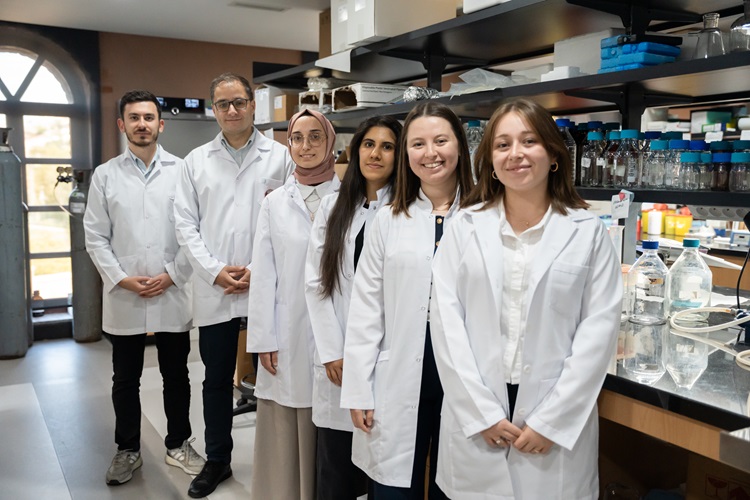
Selahattin Aydoğan
Betül Oruçoğlu
Undergraduate Education: 2021 – Marmara University – Bioengineering
Master's Education: 2024 – Istanbul University – Biotechnology
PhD Education: 2025 - Present – Bezmialem Vakif University – Biotechnology
Ayşenur Çakmak
Undergraduate Education: 2024 – Üsküdar University – Molecular Biology and Genetics
Master's Education: 2024-Present – Bezmialem Vakif University – Biotechnology
Buse Avcı
Undergraduate Education: 2022 – Istanbul University – Molecular Biology and Genetics
Master's Education: 2022-Present – Istanbul University – Molecular Biotechnology and Genetics
Dilan Kutlay
She completed her undergraduate studies in Biology at Hacettepe University in 2022. She is currently pursuing her master's degree in Molecular Biotechnology and Genetics at Istanbul University, where she is working under the supervision of her primary advisor, with additional guidance provided by a co-advisor.
Undergraduate Education: 2022 – Hacettepe University – Biology
Master's Education: 2024-Present – Istanbul University – Molecular Biotechnology and Genetics (Co-Advisor)
Dima Amairy
He is currently pursuing his master's degree in Biomedical Engineering at Istanbul Medipol University, where he is working under the supervision of his primary advisor with additional guidance provided by a co-advisor. Master's Education: 2023-Present – Istanbul Medipol University – Biomedical Engineering (Co-Advisor)
Selahattin Aydoğan:
He completed his undergraduate studies in Bioengineering at Marmara University in 2021. Building on this foundation, he pursued a master's degree in Biotechnology at Istanbul University, graduating in 2024. He is currently continuing his academic journey as a PhD student in Biotechnology at Bezmialem Vakif University, where he began his doctoral studies in 2025.
“BILSAB is an ideal institute for those dedicated to research. It offers all the necessary facilities in one place, eliminating the need to look elsewhere. Additionally, its location provides a calming and comfortable environment."
Betül Oruçoğlu:
She completed her undergraduate studies in Bioengineering at Marmara University in 2021. Building on this academic foundation, she pursued a master's degree in Biotechnology at Istanbul University, graduating in 2024. She is currently advancing her academic career as a PhD student in Biotechnology at Bezmialem Vakif University, where she began her doctoral studies in 2025.
“BILSAB offers researchers a modern infrastructure with laboratories equipped with cutting-edge technology. This dynamic structure, where researchers from different disciplines come together, offers a collaborative atmosphere that encourages interdisciplinary projects and allows innovative ideas to emerge. In addition to the facilities needed for research, BILSAB prioritizes motivation, which is one of the biggest supporters of scientific productivity. In addition to a peaceful, friendly and supportive working environment, there are social events that inspire researchers, a large and spacious garden and recreation area for a pleasant break."
Ayşenur Çakmak:
She completed her undergraduate studies in Molecular Biology and Genetics at Üsküdar University in 2024. She is currently pursuing her master's degree in Biotechnology at Bezmialem Vakif University, where she began her graduate studies in 2024.
“BILSAB has interdisciplinary professors who are experts in their fields. In addition to its state-of-the-art laboratories for both wet and dry labs, it provides all kinds of opportunities for the institute members to be productive with its BILSAB seminars, motivational events and a garden suitable for taking breaks with the unique air of Beykoz."
Buse Avcı:
She completed her undergraduate studies in Molecular Biology and Genetics at Istanbul University in 2022. In the same year, she began her master's studies in Molecular Biotechnology and Genetics at Istanbul University, where she is currently continuing her graduate work.
"BILSAB is researcher and student-friendly, offering research opportunities, expert professors who guide researchers at every step, and a welcoming work environment."
Dilan Kutlay
She completed her undergraduate studies in Biology at Hacettepe University in 2022. She is currently pursuing her master's degree in Molecular Biotechnology and Genetics at Istanbul University, where she is working under the supervision of her primary advisor, with additional guidance provided by a co-advisor.
Dima Amairy
He is currently pursuing his master's degree in Biomedical Engineering at Istanbul Medipol University, where he is working under the supervision of his primary advisor with additional guidance provided by a co-advisor.
Lab Alumni:
Handan Şimşek (MS)
Betül Oruçoğlu (MS)
Hursima İzgiş (MS)
Selahattin Aydoğan (MS)
Achievements as a team
Our research group has a proven record of excellence, supported by high-impact publications and sustained contributions to both drug design and circadian biology. We combine advanced expertise in computational drug discovery with deep biological insight into the molecular architecture of the circadian clock. Our technical capabilities extend across biochemical and biophysical assays, cell-based functional studies, and in vivo models.
We maintain a strong translational focus, leveraging mechanistic discoveries in circadian regulation to guide the development of novel therapeutic candidates. Our work is further strengthened by productive collaborations with leading national and international groups, enabling access to complementary technologies and multidisciplinary perspectives. Guided by a forward-looking and innovative strategic vision, our group is committed to transforming fundamental discoveries at the interface of chronobiology and drug design into impactful biomedical applications.
Projects
-
Fonksiyon Kaybına Uğramış TP53'e Sahip Pankreas Kanseri Hücrelerinde CRY Proteinlerinin Kemoterapi Etkinliği Üzerindeki Etkisinin Araştırılması In Revision
-
Understanding the Mechanism of Activity Small Molecule JET1 Regulating the Circadian Rhythm Amplitude and Its Effects on Jet-Lag
-
Improving the Efficacy of CRY1 Destabilizer Small Molecule M47 that Enhances Apoptosis in p53 Knockout Cells by Fragment Based Optimization Method
-
Understanding the Function of Circadian Clock in Pancreatic Cancer and Examination the Role of CRY Proteins in Pancreatic Cancer
-
Examining the Circadian Rhythm in Different Pancreatic Cancer Cell Lines with Gain-of-Function p53 Mutations
-
Examining the Effect of Cryptochrome Deletion in Various Pancreatic Cancer Cell Lines with Gain-of-Function p53 Mutations
-
Discovery of genes linked to sleep disorders, their molecular characterization, and investigation of their roles in disease pathogenesis
-
Discovery of AI-Based Drug Candidate Molecules that Accelerate CRY2 Degradation for the Treatment of Cancer and Circadian Rhythm Disorders
-
Borik asit takviyeli fare embriyo kültür medyumunun in vivo gelişim potansiyeli uzun vadeli etkilerinin araştırılması
Ongoing Grants
Understanding the Activity Mechanism of Small Molecule JET1 Regulating the Circadian Rhythm Amplitude and Its Effects on Jet-Lag Health Institutes of Türkiye (TUSEB Group-B) 2024-2026 TLR 2.499.750,00 Partners: Koc University, Türkiye
Improving the Efficacy of CRY1 Destabilizer Small Molecule M47 that Enhances Apoptosis in p53 Knockout Cells by Fragment Based Optimization Method Health Institutes of Türkiye (TUSEB Group-B) 2024-2026 Partners: Koc University, Türkiye
Discovery of genes linked to sleep disorders, their molecular characterization, and investigation of their roles in disease pathogenesis Health Institutes of Türkiye (TUSEB Group-B)
Examining the Circadian Rhythm in Different Pancreatic Cancer Cell Lines with Gain-of-Function p53 Mutations (2024-2026) BAP-2024-0624
Examining the Effect of Cryptochrome Deletion in Various Pancreatic Cancer Cell Lines with Gain-of-Function p53 Mutations TUBITAK Principal Investigator: Halil Kavaklı, Partners: Munich Technical University
Completed grants/projects
Kriptokrom1 ikincil pakete bağlanan moleküllerin sirkadiyen saat üzerine olan etkilerinin incelenmesi+C13:D21
Patojenik BMAL1 SNP'lerinin Sirkadiyen Saat Mekanizmasına Etksinin Belirlenmesi
Identification of Proteins Interacting with Biotinylated-terpinolene in Mcf7 Cells and Modeling These Interactions
Discovery of a SARS-CoV-2 Inhibitor Using Biosafe SARS-CoV-2 Replicon via Drug Repurposing Method
Determining the Effect of Pathogenic BMAL1 SNPs on the Circadian Clock Mechanism
Pharmacokinetics of CLK8 Compound, which Regulates the Function of CLOCK Protein, in Mice
Analyzing the in vivo effects of CLK8 Molecule
Drug repurposing against Lassa virus proteins by using in silico methods (Master Thesis)
Drug design against SARS-CoV-2 virus via drug repurposing by using in vitro methods (Master Thesis)
Analyzing the effect of pathogenic SNPs found on the PAS-B and C-terminal oscillator regulatory domains of BMAL1 (Master Thesis)
Analyzing the effect of pathogenic SNPs found on the bHLH and PAS-A domain of BMAL1 (Master Thesis)
Completed Grants:
(2023-2024) Identification of Proteins that Interact with Biotinylated-Terpinolene in MCF7 Cells and Modeling of These Interactions (TUSEB Group-A)
(2022-2024) Discovery of a SARS-CoV-2 Inhibitor Using Biosafe SARS-CoV-2 Replicon via Drug Repurposing Method
(2022-2024) Drug design against SARS-CoV-2 virus via drug repurposing by using in vitro methods. Principal Investigator: Mahmut Çalışkan Istanbul University, Türkiye
Selected Publications
M54 selectively stabilizes the circadian clock component of CRY1 and enhances the period of circadian rhythm at cellular level
Gul Z. M., Aydogan S., Surme S., Efendi S. N. H.,Ozcan O., Uyanik E., Baris I., Gul S., Kavakli I. H.
Journal of Biological Chemistry, 2025
Identification of potential SARS-CoV-2 inhibitors among well-tolerated drugs using drug repurposing and in vitro approaches
Orucoglu B., Cetin I., Simsek H., Topcul M., Caliskan M., Aydin C., Kavakli I. H., Okyar A., Gul S.
Scientific Reports, vol.15, 2025
The impact of circadian rhythm disruption on oxaliplatin tolerability and pharmacokinetics in Cry1−/−Cry2−/− mice under constant darkness
Akyel Y. K., Seyhan N. O., Gul S., Celik M., Taskin A. C., Selby C. P., Sancar A., Kavakli I. H., Okyar A.
Archives of Toxicology, 2025
Discovering Lassa virus nucleoprotein inhibitors via in silico drug repositioning approach
Simsek H., Gul S. Journal of Biomolecular Structure and Dynamics, 2024
Boric acid supplementation promotes the development of in vitro-produced mouse embryos by related pluripotent and antioxidant genes
Taskin A. C., Kocabay A., Gul S., Sahin G. N., Karahuseyinoglu S., Kavakli I. H., et al. Zygote, 2024
A novel smart disinfection system using 3D-printed and electrically conductive composite hydrogel
Khan S. A., Malik A. N., Velioglu B., Gul S., Kavakli I. H., Lazoglu I. Emergent Materials, 2024
Dynamic regulation of the serine loop by distant mutations reveals allostery in cryptochrome1
Ozcan O., Gul S., Kavakli I. H. Journal of Biomolecular Structure and Dynamics, vol.42, no.19, pp.10417-10428, 2024
TW68, cryptochromes stabilizer, regulates fasting blood glucose levels in diabetic ob/ob and high fat-diet-induced obese mice
Surme S., Ergun C., Gul S., Akyel Y. K., Gul Z. M., Ozcan O., et al. Biochemical Pharmacology, vol.218, 2023
Functional characterization of the CRY2 circadian clock component variant p.Ser420Phe revealed a new degradation pathway for CRY2
Parlak G. C., Baris I., Gul S., Kavakli I. H. The Journal of biological chemistry, vol.299, no.12, pp.105451, 2023
Synthesis of Novel Hybrid Lonidamine-Coumarin Derivatives and Their Anticancer Activities
Ipek O. S., Sucu B. O., Gul S., Yolacan C., Guzel M. Journal of Molecular Structure, vol.1281, 2023
Diurnal Changes in Capecitabine Clock-Controlled Metabolism Enzymes Are Responsible for Its Pharmacokinetics in Male Mice
Akyel Y. K., Öztürk Civelek D., Ozturk Seyhan N., Gul S., Gazioglu I., Pala Kara Z., et al. Journal of biological rhythms, vol.38, no.2, pp.171-184, 2023
Discovery of a small molecule that selectively destabilizes Cryptochrome 1 and enhances life span in p53 knockout mice
Gul S., Akyel Y. K., Gul Z. M., Isin S., Ozcan O., Korkmaz T., et al. Nature Communications, vol.13, no.1, 2022
Analysis of ACE2 and TMPRSS2 coding variants as a risk factor for SARS-CoV-2 from 946 whole-exome sequencing data in the Turkish population
Duman N., Tuncel G., Bisgin A., Tug Bozdogan S., Ozemri Sag S., Gul S., et al. Journal of Medical Virology, vol.94, no.11, pp.5225-5243, 2022
The secondary pocket of cryptochrome 2 is important for the regulation of its stability and localization
Parlak G. C., Camur B. B., Gul S., Ozcan O., Baris I., Kavakli I. H. Journal of Biological Chemistry, vol.298, no.9, 2022
The Structure-Based Molecular-Docking Screen Against Core Clock Proteins to Identify Small Molecules to Modulate the Circadian Clock
Gul S., Kavakli I. H. Methods in molecular biology (Clifton, N.J.), vol.2482, pp.15-34, 2022
Proteome analysis of the circadian clock protein PERIOD2
Gul H., Selvi S., Yilmaz F., Ozcelik G., Olfaz-Aslan S., Yazan S., et al. Proteins: Structure, Function and Bioinformatics , vol.90, no.6, pp.1315-1330, 2022
In Silico Analysis of a de Novo OTC Variant as a Cause of Ornithine Transcarbamylase Deficiency
Ozdemir Y., Cag M., Gul S., Yüksel Z., Ergoren M. C. Applied Immunohistochemistry and Molecular Morphology, vol.30, no.2, pp.153-156, 2022
Structure-based design and classifications of small molecules regulating the circadian rhythm period
Gul S., Rahim F., Isin S., Yilmaz F., Ozturk N., Turkay M., et al. Scientific Reports, vol.11, no.1, 2021
Identification of a Novel de Novo COMP Gene Variant as a Likely Cause of Pseudoachondroplasia
Tuncel G., Akcan N., Gul S., Sag S. O., Bundak R., Mocan G., et al. Applied Immunohistochemistry and Molecular Morphology, vol.29, no.7, pp.546-550, 2021
In silico drug repositioning against human nrp1 to block sars-cov-2 host entry
Gul S. Turkish Journal of Biology, vol.45, no.Special Issue 1, pp.442-458, 2021
Transcriptome analysis of the circadian clock gene BMAL1 deletion with opposite carcinogenic effects
Emisoglu-Kulahli H., Gul S., Morgil Gercek H., Ozcan O., Aygenli F., Selvi S., et al. Functional and Integrative Genomics , vol.21, no.1, pp.1-16, 2021
In silico identification of widely used and well-tolerated drugs as potential SARS-CoV-2 3C-like protease and viral RNA-dependent RNA polymerase inhibitors for direct use in clinical trials
Gul S., Ozcan O., Asar S., Okyar A., Barıs I., Kavakli I. H. Journal of Biomolecular Structure and Dynamics , vol.39, no.17, pp.6772-6791, 2021
The Arg-293 of Cryptochrome1 is responsible for the allosteric regulation of CLOCK-CRY1 binding in circadian rhythm
Gul S., Aydin C., Ozcan O., Gurkan B., Surme S., Baris I., et al. Journal of Biological Chemistry , vol.295, no.50, pp.17187-17199, 2020
Unique combination and in silico modeling of biallelic POLR3A variants as a cause of Wiedemann–Rautenstrauch syndrome
Temel S. G., Ergoren M. C., Manara E., Paolacci S., Tuncel G., Gul S., et al. European Journal of Human Genetics , vol.28, no.12, pp.1675-1680, 2020
Human CRY1 variants associate with attention deficit/hyperactivity disorder
Emre Onat O. E., Ece Kars M., Gul S., Bilguvar K., Wu Y., Ozhan A., et al. The Journal of clinical investigation , vol.130, no.7, pp.3885-3900, 2020
A CLOCK-binding small molecule disrupts the interaction between CLOCK and BMAL1 and enhances circadian rhythm amplitude
Doruk Y. U., Yarparvar D., Akyel Y. K., Gul S., Taskin A. C., Yilmaz F., et al. Journal of Biological Chemistry , vol.295, no.11, pp.3518-3531, 2020
Identification and Characterization of a New Class of (6-4) Photolyase from Vibrio cholerae
Dikbas U. M., Tardu M., Canturk A., Gul S., Ozcelik G., Baris I., et al. Biochemistry , vol.58, no.43, pp.4352-4360, 2019
Centriolar satellites are required for efficient ciliogenesis and ciliary content regulation
Odabasi E., Gul S., Kavakli I. H., Firat-Karalar E. N. EMBO Reports , vol.20, no.6, 2019
DNA repair by photolyases
Kavakli I. H., Ozturk N., Gul S. Advances in protein chemistry and structural biology , vol.115, pp.1-19, 2019
The Photolyase/Cryptochrome Family of Proteins as DNA Repair Enzymes and Transcriptional Repressors
Kavakli I. H., Baris I., Tardu M., Gul S., Oner H., Cal S., et al. Photochemistry and Photobiology , vol.93, no.1, pp.93-103, 2017
Glu-370 in the large subunit influences the substrate binding, allosteric, and heat stability properties of potato ADP-glucose pyrophosphorylase
Seferoglu A. B., Gul S., Dikbas U. M., Baris I., Koper K., Caliskan M., et al. Plant Science , vol.252, pp.125-132, 2016
Conformational sampling of peptides in the presence of protein crowders from AA/CG-multiscale simulations
Predeus A. V., Gul S., Gopal S. M., Feig M. Journal of Physical Chemistry B , vol.116, no.29, pp.8610-8620, 2012
Computational study of factors controlling the boat and chair transition states of ireland-claisen rearrangements
Gul S., Schoenebeck F., Aviyente V., Houk K. Journal of Organic Chemistry, vol.75, no.6, pp.2115-2118, 2010