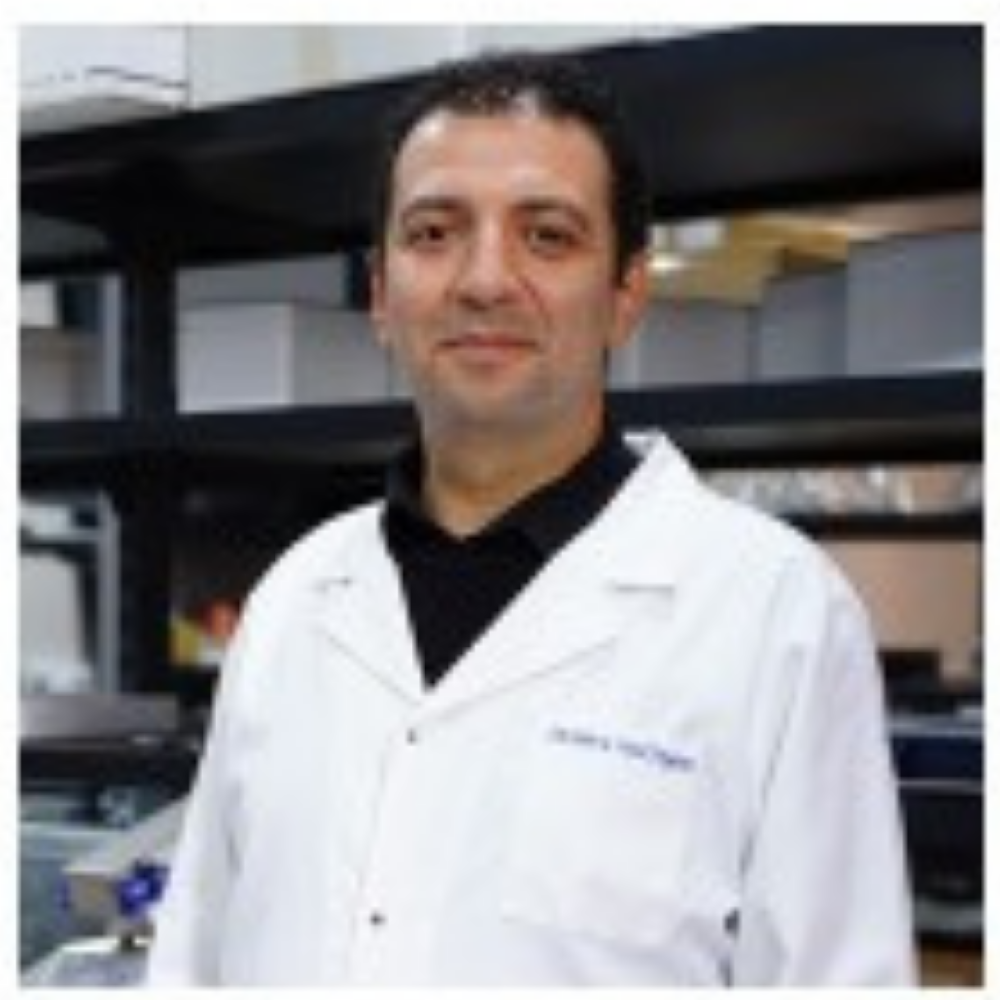
Şükrü Anıl Doğan
Research Area: Mitochondrial Biology and Medicine
Field of expertise
Mitochondrial biology, mitochondrial medicine, therapeutic approaches against mitochondrial diseases, mouse models, mitochondrial stress signaling, reactive oxygen species, drug toxicity.
Scientific Impact
Dr. Doğan brings extensive experience in mitochondrial biology, bioenergetics, and therapeutic interventions. He has served on various scientific committees, acted as a reviewer for leading scientific journals, and been actively engaged in science communication. Recognized for his contributions, Dr. Doğan has received prestigious accolades, including the EMBO Installation Grant and The Science Academy's Young Scientist Award. His proven expertise and leadership uniquely position him to advance the research program he envisions at BILSAB.
Ongoing work
Doğan Lab is studying mitochondrial involvement in health and disease, focusing on different signals emanating from mitochondria and systematically dissecting the molecular pathways that these signals activate with a view to deciphering their role in aging, age-related diseases, metabolism and mitochondrial fitness. We are especially interested in mitochondrial diseases in general, mitochondrial cardiomyopathy and myopathy in particular. Doğan Lab focuses on (i) generating and characterizing mouse models of mitochondrial dysfunction, (ii) tissue-specifity of mitochondrial diseases and mitochondrial stress responses, (iii) mitochondrial reactive oxygen species (ROS) signaling, (iv) mitochondrial toxicity of drugs, and (v) clinical/patient-related studies.
Doğan Lab has extensive knowledge and a decade of experience in designing, generating, and characterizing genetically modified mouse models of mitochondrial disease/dysfunction, mitochondria, metabolism, cardiomyopathy, myopathy, neurodegeneration, signaling pathways and age-related diseases.
Vision
Doğan Lab would like to lay the groundwork for potential novel therapies that could be applied to a number of organ- and tissue-specific human mitochondrial conditions, and to drive innovation in mitochondrial research, contributing to both scientific discovery and societal impact. By mentoring the next generation of mitochondrial scientists in a supportive environment where team members can grow and excel, the lab is dedicated to build a robust scientific community in Türkiye and beyond.
Approach
As a mentor, Dr. Doğan emphasizes the importance of collaboration and creativity, encouraging his team to explore bold ideas. Doğan Lab has recently relocated to BILSAB that offers a dynamic, interdisciplinary environment that encourages collaboration and discovery. At BILSAB, Dr. Doğan leverages state-of-the-art facilities to push the boundaries of mitochondrial research, creating opportunities for groundbreaking discoveries and impactful applications.
About the team
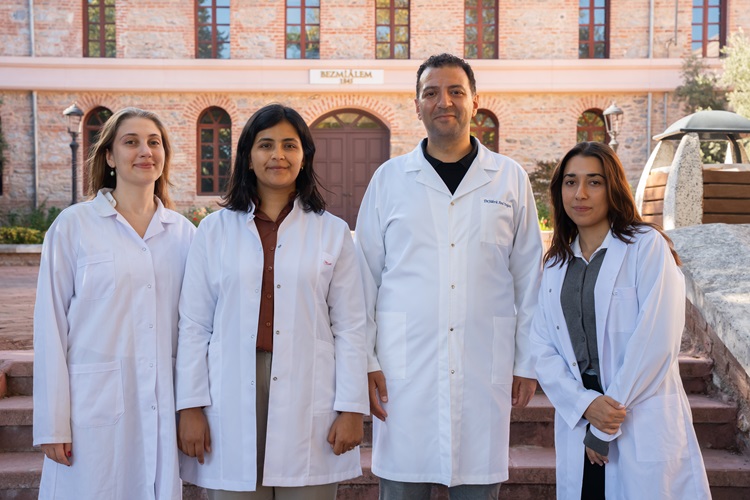
Currently the lab has one Ph.D. and one M.Sc. student. They are investigating key questions in mitochondrial biology, metabolism, neurodegeneration and aging, bridging fundamental research with disease-focused studies.
Aylin Karataş received her B.Sc. degree in Molecular Biology and Genetics from Istanbul Technical University in 2021. She completed her M.Sc. in the Molecular Medicine and Biotechnology program at Istanbul Medipol University, where she worked on cardiac innervation in whole hearts from arrhythmia mouse model. Currently, she is a researcher in the Doğan Lab at BILSAB, focusing on metabolic consequences of mitochondrial dysfunction.
“I highly recommend BILSAB for its peaceful atmosphere, its connection to nature, and its historic building, which create an inspiring environment. Additionally, the collaborative and participative working culture at BILSAB makes it an enjoyable and enriching place to work." Aylin
Ceyda Ergül received her B.Sc. degree in Bioengineering from Marmara University in 2024. During her undergraduate studies, she completed a thesis project investigating blood-based biomarkers shared between obesity and type 2 diabetes, using a systems biology approach. Currently, she is pursuing her M.Sc. in Biotechnology and conducting her research in the Doğan Lab at BILSAB, where she focuses on mitochondrial dysfunction in neurodegeneration.
Ceyda is a big advocate of BILSAB for
“its unique nature and beautiful campus as well as its role as a hub that brings together researchers from diverse fields to grow scientifically." Ceyda
Projects
-
Tissue-specificity of Mitochondrial Diseases and Mitochondrial Stress Responses
-
Mitochondrial Reactive Oxygen Species (ROS) Signaling
-
Metabolic Consequences of Mitochondrial Dysfunction
-
Mitochondria in Energy Balance and Brain Aging
-
Lab alumni
Graduated Students
Mr. Mehmet Yılmaz (Preliminary Characterization of a Novel Mitochondrial Myopathy Mouse Model, 2022), currently a Ph.D. student in Germany
Ms. Özlem Kartal [Further Characterization of Heart- And Skeletal Muscle-Specific Mitochondrial Aspartyl-tRNA Synthetase (DARS2) Knockout Mouse, 2002], currently a Ph.D. student in Italy
Ms. Semin Erkul (Alleviating Mitochondrial Myopathy in Mice, 2023), currently a Ph.D. student in Finland
Ms. Bengi Bekmez (The Effects of 5-Aminoimidazole-4-carboxamide ribonucleotide (AICAR) on Mitochondrial (Cardio)Myopathy, 2024), currently a Ph.D. student in Barcelona
Ms. Zeynep Melis Kayğun (Possible Effects of Baclofen on Mitochondrial Function, 2024), currently a Ph.D. student in Türkiye
Ongoing Grants
(As researcher) with Assist. Prof. Serkan Kir of Koc University. Prevention of cancer-associated muscle wasting by NIK inhibition. TUBITAK 1001, 124Z372, 2024-2027.
(As researcher) with Prof. Zeynep Karakas of Istanbul University. In-vitro Potential Therapeutic Effects of NAD+ and Antioxidants on Oxidized Hemoglobin and Mitochondrial Damage-Associated Molecular Patterns (DAMPs) in Hemoglobinopathies. The Council of Higher Education (YOK) Research Universities Support Program, 39178, 2022-2025.
(As advisor) with Dr. Ibrahim Turkel of Hacettepe University. Polycystic Ovary Syndrome (PCOS) Model Induced by Letrozole and Mitochondrial Dysregulation. TUBITAK 3501, 885058, 2025-2027.
Completed grants/projects
The Council of Higher Education (YOK) Research Universities Support Program-50004, Possible Effects of Baclofen on Mitochondrial Function, 2023-2024
TUBITAK 3501 Young Investigator Grant, Amelioration of Mitochondrial (Cardio)Myopathy in Mice Using Two Different Approaches, 2022-2024
Bogazici University Start-Up Grant, Modeling Mitochondrial Myopathy in Mice, 2020 – 2022
EMBO Installation Grant, ROS-Mediated Control of Tissue-Specific Mitochondrial Biogenesis, 2019 – 2023
TUBITAK 2232 – Research Scholarship Program, Characterization of skeletal muscle-specific mitochondrial aspartyl-tRNA synthetase (DARS2) deficiency, especially in the context of mitochondrial stress pathways, in mice, 2019 – 2021
The Science Academy Young Scientists Award Program, Mitochondria, 2019 – 2021
Selected Publications
Balci, MC, Gedikbasi, A, Dogan, SA, Kahraman, S, Tatoryan, S, Neijmann, ST, Karaca, M, Atalar, F, Gokcay, G. (2024) The role of oxidative damage and mitochondrial dysfunction in the pathogenesis of cystathionine beta-synthase deficiency. Sci Rep, 14, 28815
Agca, S, Domaniku Waraich, A, Bilgic, SN, Sucuoglu, M, Dag, M, Dogan, SA, Kir, S. (2024) Tumor-induced alterations in single-nucleus transcriptome of atrophying muscles indicate enhanced protein degradation and reduced oxidative metabolism. Journal of Cachexia, Sarcopenia and Muscle, 15 (5), 1898-1914
Dogan SA, Giacchin G, Zito E, Viscomi C (2022) Redox signaling and stress in inherited myopathies. Antioxid Redox Signal, 37 (4-6), 301-323
Silva-Pinheiro P, Pardo-Hernández C, Reyes A, Tilokani L, Mishra A, Cerutti R, Li S, Rozsivalova DH, Valenzuela S, Dogan SA, Peter B, Fernández-Silva P, Trifunovic A, Prudent J, Minczuk M, Bindoff L, Macao B, Zeviani M, Falkenberg M, Viscomi C (2021) DNA polymerase gamma mutations that impair holoenzyme stability cause catalytic subunit depletion. Nucleic Acids Res, 49: 5230-5248
Dogan SA, Cerutti R, Benincà C, Brea-Calvo G, Jacobs HT, Zeviani M, Szibor M, Viscomi C (2018) Perturbed Redox Signaling Exacerbates a Mitochondrial Myopathy. Cell Metab, 28: 764–775.e5
Civiletto G, Dogan SA, Cerutti R, Fagiolari G, Moggio M, Lamperti C, Benincà C, Viscomi C, Zeviani M (2018) Rapamycin rescues mitochondrial myopathy via coordinated activation of autophagy and lysosomal biogenesis. EMBO Mol Med, e8799 10(11)
Aradjanski M, Dogan SA, Lotter S, Wang S, Hermans S, Wibom R, Rugarli E, Trifunovic A (2017) DARS2 protects against neuroinflammation and apoptotic neuronal loss, but is dispensable for myelin producing cells. Hum Mol Genet, 26: 4181–4189
Bottani E, Cerutti R, Harbour ME, Ravaglia S, Dogan SA, Giordano C, Fearnley IM, D'Amati G, Viscomi C, Fernandez-Vizarra E, Zeviani M (2017) TTC19 Plays a Husbandry Role on UQCRFS1 Turnover in the Biogenesis of Mitochondrial Respiratory Complex III. Mol Cell, 67: 96–105.e4
Dogan SA, Pujol C, Maiti P, Kukat A, Wang S, Hermans S, Senft K, Wibom R, Rugarli EI, Trifunovic A (2014) Tissue-specific loss of DARS2 activates stress responses independently of respiratory chain deficiency in the heart. Cell Metab, 19: 458–469
Kukat A, Dogan SA, Edgar D, Mourier A, Jacoby C, Maiti P, Mauer J, Becker C, Senft K, Wibom R, Kudin AP, Hultenby K, Flögel U, Rosenkranz S, Ricquier D, Kunz WS, Trifunovic A (2014) Loss of UCP2 attenuates mitochondrial dysfunction without altering ROS production and uncoupling activity. PLoS Genet, 10: e1004385
Demirci S, Koban Baştanlar E, Dağtaş ND, Pişkin E, Engin A, Ozer F, Yüncü E, Doğan SA, Togan I (2013) Mitochondrial DNA diversity of modern, ancient and wild sheep (Ovis gmelinii anatolica) from Turkey: new insights on the evolutionary history of sheep. PLoS One, 8: e81952
Yüncü E, Demirci S, Baştanlar EK, Doğan ŞA, Taşdemir U, Togan İ (2013) Comparative study of three simple molecular approaches in search of mtDNA haplogroup identification of domestic sheep. Small Ruminant Research, 114: 64–71
Dogan SA, Trifunovic A (2011) Modelling mitochondrial dysfunction in mice. Physiol Res, 60 Suppl 1: S61–70